
How to Unblock a Drain Without Chemicals
September 14, 2026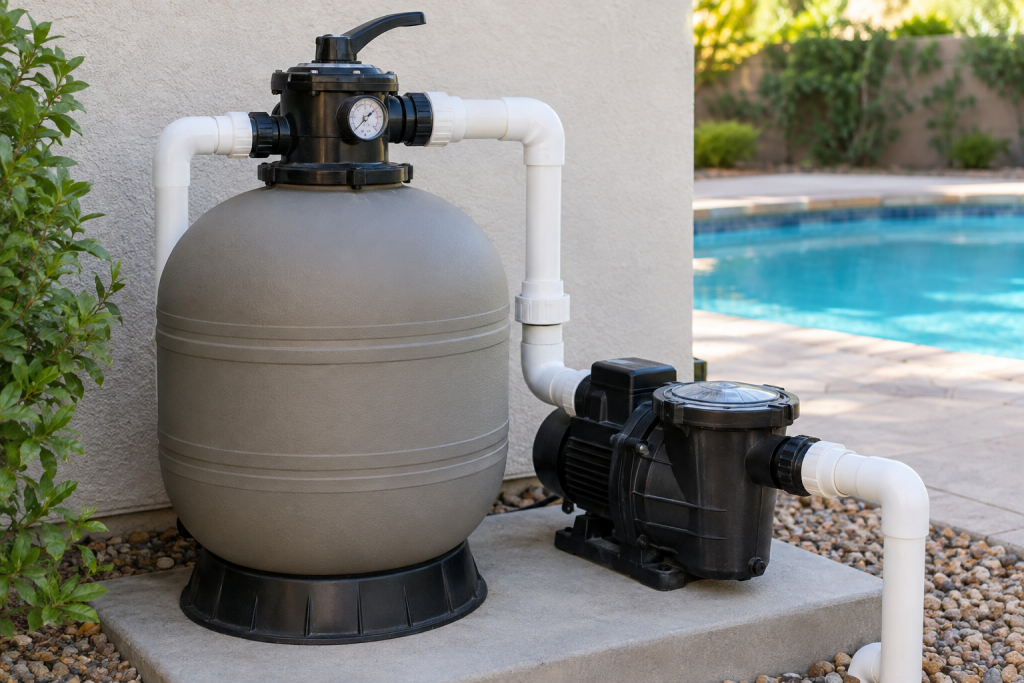
A sand filter can provide reliable pool filtration for years, but it still needs regular observation and maintenance. Backwashing removes collected dirt from the filter bed; it does not necessarily correct compacted media, damaged internal parts or every decline in filtration performance.
If you are reopening a pool after winter, investigating persistently cloudy water or planning a complete media change, it helps to diagnose the problem before emptying the filter. This guide explains what to check and how to approach a sand change safely.
When should swimming pool filter sand be replaced?
Filter sand does not suddenly stop working on a particular anniversary. Its condition is affected by the filter model, water chemistry, bather load, debris, maintenance and the length of the pool season.
A fixed replacement interval can therefore be misleading. Start with the filter manufacturer’s manual and investigate the complete system before assuming that the sand is responsible.
Is the filter sand definitely the problem?
Cloudy water or reduced circulation can also result from:
- Incorrect water chemistry
- Insufficient circulation time
- Blocked skimmer or pump baskets
- A dirty pump impeller
- An unreliable pressure gauge
- An incorrect valve position
- A circulation or plumbing problem
- A need to backwash
- Damage inside the filter
If sand is appearing in the pool, inspect the laterals and standpipe. New media will not repair a cracked internal component.
Signs that the media may require replacement
The sand may need closer inspection if:
- Backwashing no longer restores normal performance
- The sand has become hard, clumped or crusted
- Water has formed channels through the media
- The filter struggles to maintain clear water despite correct chemistry and circulation
- Flow or pressure remains abnormal after routine maintenance
- The filter contains contaminated or unsuitable media
A pool professional can help diagnose the cause if the symptoms are unclear.
Backwashing versus replacing filter media
During normal filtration, dirt becomes trapped as pool water passes through the sand bed. Backwashing reverses the flow, disturbs the bed and carries loosened debris to waste. Rinsing then helps settle the media before filtration resumes.
Replacing the media is a more substantial job. It requires the filter to be isolated, depressurised, opened and emptied before its internal parts can be inspected and new media added.
Prepare before opening the filter
You will need:
- The correct manual for the filter model
- The specified quantity and grade of replacement media
- Appropriate hand tools
- Protective gloves and footwear
- Containers or bags for the removed material
- A hose and suitable drainage
- Any replacement seals required
- A safe method for removing the old sand
Wet filter sand is surprisingly heavy. Decide how you will remove and dispose of it before dismantling the filter.
Changing swimming pool filter sand
Always follow the filter manufacturer’s instructions. The following is a general guide rather than a substitute for the manual.
1. Isolate the circulation system
Switch the circulation pump off and isolate the electrical supply. Disable timers and automated controls so the system cannot restart.
Never change the position of a multiport valve while the pump is operating.
2. Depressurise and drain the filter
Open the air relief if the filter has one and confirm that its pressure gauge reads zero. Drain the vessel using the method described in the manual.
A pressurised filter must never be opened.
3. Record the pipework
Take clear photographs of the valve, hoses and pipe connections. Marking them where necessary can make reassembly much easier.
4. Remove the valve or filter lid
Open the vessel according to its instructions. Cover the centre standpipe immediately to prevent loose sand from entering it.
Take care with older plastic parts, clamps and seals.
5. Remove the existing media
Old sand may be removed manually, with appropriate extraction equipment or with a tool made for the task.
The Magic Pump Sand+ is designed to assist with removing used pool-filter sand while giving you control over where the removed material goes. It offers an alternative to repeatedly reaching into the filter and scooping out heavy, wet sand by hand.
Work slowly as you reach the bottom of the vessel. The laterals and standpipe must not be struck, bent or pulled out of position.
6. Inspect the internal components
With the media removed, check:
- The laterals
- The centre standpipe
- The diffuser
- Accessible seals and O-rings
- The inside of the filter vessel
Replace damaged components before refilling the filter.
7. Add water to protect the laterals
Many manufacturers specify that the filter vessel should be partly filled with water before the new media is added. This cushions the internal components from the falling sand.
Use the level stated in the filter’s manual.
8. Load the specified filter media
Use the correct grade, type and quantity. General-purpose sand, play sand and building sand are not suitable substitutes unless the filter manufacturer expressly specifies them.
Keep the standpipe covered and centred. Pour the media gradually and distribute it evenly.
9. Reassemble the filter
Clean the sealing surfaces, check the position of the O-rings and refit the valve or lid. Reconnect the pipework without overtightening plastic fittings.
10. Backwash and rinse
New media normally needs an initial backwash to waste, followed by a rinse, before the valve is returned to its normal filter position.
Always stop the pump before moving the multiport valve. Follow the timings and sequence in the filter manual.
11. Restart and inspect
When normal filtration resumes:
- Check for leaks
- Observe the pressure gauge
- Confirm normal return flow
- Watch for sand entering the pool
- Record the filter’s clean starting pressure
This recorded pressure provides a useful reference when deciding when future backwashing is required.
Mistakes that can cause problems
Common errors include:
- Working on equipment that has not been isolated
- Opening a filter before releasing the pressure
- Moving the valve while the pump is running
- Buying media before checking the filter specification
- Leaving the standpipe uncovered
- Damaging laterals during sand removal
- Pouring media onto dry, unprotected internal components
- Skipping the initial backwash and rinse
- Overtightening plastic unions or clamps
A more controlled approach to removing old sand
The condition and position of a pool filter can make manual sand removal slow and uncomfortable. A purpose-designed removal method can make this stage more manageable and help direct the old material into a suitable container or disposal area.
The Magic Pump Sand+ is designed for this awkward part of pool-filter maintenance.
Frequently asked questions
How often should pool filter sand be changed?
There is no reliable interval for every filter and pool. Follow the filter manufacturer’s guidance and consider performance, media condition, water chemistry and the state of the internal components.
Is cloudy pool water proof that the sand needs replacing?
No. Water balance, filtration time, circulation and other equipment problems should be checked first.
What sand should I put in my filter?
Use only the media specified for your filter model, in the stated grade and quantity.
Why is filter sand coming into the swimming pool?
A damaged lateral, standpipe or other internal component may be allowing media to escape. The filter should be inspected before new sand is installed.
Must new filter sand be backwashed?
Most manufacturers instruct users to backwash and rinse newly loaded media before returning to normal filtration. Follow your filter manual.
Is changing filter sand a DIY job?
It can be, provided you understand how to isolate, depressurise and dismantle your particular filter safely. If you are uncertain, employ a competent pool engineer.
Plan the job before you begin
Confirm the filter model, obtain its manual and purchase the correct media before opening the vessel. Preparing the disposal area and choosing how to remove the old sand will help the work proceed safely and efficiently.
